Kayak jet drives are changing the way people explore waterways. These motorized systems add power to traditional kayaks, letting paddlers go farther and faster. Jet drives can push kayaks to speeds over 20 mph and cover up to 60 miles on a single tank of fuel.
Companies like Aquanami and Mokai are leading the way with jet-powered kayak designs. Their models use small gasoline engines to pump water through a jet nozzle, creating thrust. This setup works in shallow water where regular boat propellers can’t go.
Jet kayaks open up new possibilities for fishing and recreation. Anglers can reach remote spots quickly and easily. Explorers can travel upstream against currents that would tire out even strong paddlers. For those who want extra power without giving up the nimble kayak experience, jet drives offer an exciting solution.
Table of Contents
Evolution of Kayaking
Kayaking has come a long way from its early roots as a hunting tool. The sport has seen big changes in design and power over time.
From Paddles to Motors
Kayaks started as simple boats used by Arctic peoples for hunting. They were made of animal skins stretched over wood frames. These early kayaks relied on paddles for movement. As kayaking spread, new materials like wood and fiberglass improved kayak design. Plastic kayaks came out in the 1970s. This made kayaks cheaper and easier to make. Kayak shapes also changed to fit different uses like whitewater rafting and sea kayaking.
Rise of Motorized Kayaks
In recent years, motorized kayaks have become popular. These powered kayaks use small engines instead of paddles. The first motorized kayaks used gas engines. Now, many have electric motors. Powered kayaks let people travel farther with less effort. They’re good for fishing and exploring. Some motorized kayaks have foot pedals to control the motor. Others use hand controls. The motors can often be removed so the kayak can still be paddled.
Jet Drive Technology in Kayaks
Jet drives offer kayakers a powerful way to move through water without paddles. This technology uses an engine and impeller system to propel kayaks forward quickly and efficiently.
The Mechanics of Jet Propulsion
Jet propulsion in kayaks works by pulling water into an intake and pushing it out forcefully. The system has a few key parts:
- Engine: Often a 4-stroke gasoline engine
- Impeller: Spins to create water flow
- Intake: Draws water into the system
- Nozzle: Directs water jet for propulsion
The engine spins the impeller, which sucks water in. The water gets pushed out the back at high speed. This creates forward thrust to move the kayak.
Advantages of Jet Drives Over Traditional Systems
Jet drives give kayaks some big benefits:
Speed: They can reach up to 27 mph, much faster than paddling.
Control: Steering is easy with the jet nozzle.
Shallow water use: No propeller means less risk in low water.
Hands-free operation: Lets users fish or take photos while moving.
Range: Some jet kayaks can travel 35-40 miles on a tank of gas.
Jet drives do add weight, about 15-34 pounds. But for many kayakers, the power and ease make up for the extra pounds.
Design and Features
Jet drive kayaks blend power and portability. Their unique design allows access to shallow waters while providing ample storage and mounting options.
Kayak Dimensions and Weight
Jet drive kayaks are compact yet sturdy. Most models measure between 10 to 13 feet in length. This size balances maneuverability and stability.
The width typically ranges from 32 to 36 inches. This provides a stable platform for fishing or cruising.
Dry weight varies between 80 to 120 pounds. This makes them light enough for easy transport. With the motor and fuel, the total weight can reach 150 to 200 pounds.
Some models feature a modular design. This allows them to break down into smaller pieces for easier storage and transport.
Jetangler and Es-Kape Models
The Jetangler is designed for fishing. It features a wide, stable hull for casting. The Es-Kape 2.0 is built for speed and exploration.
Both models use jet propulsion systems. These allow for navigation in very shallow waters. The absence of a propeller reduces the risk of damage from underwater obstacles.
The Jetangler includes multiple fishing rod holders. It also has a large, flat deck for standing and casting. The Es-Kape 2.0 has a more streamlined design for faster speeds.
Both models use 4-stroke gasoline engines. These provide reliable power with lower emissions than 2-stroke alternatives.
Storage and Mounting Solutions
Jet drive kayaks offer ample storage options. Most models include dry storage compartments. These keep gear and electronics safe from water.
The cockpit area often features built-in cup holders and small item storage. Some models have larger storage wells in the bow or stern.
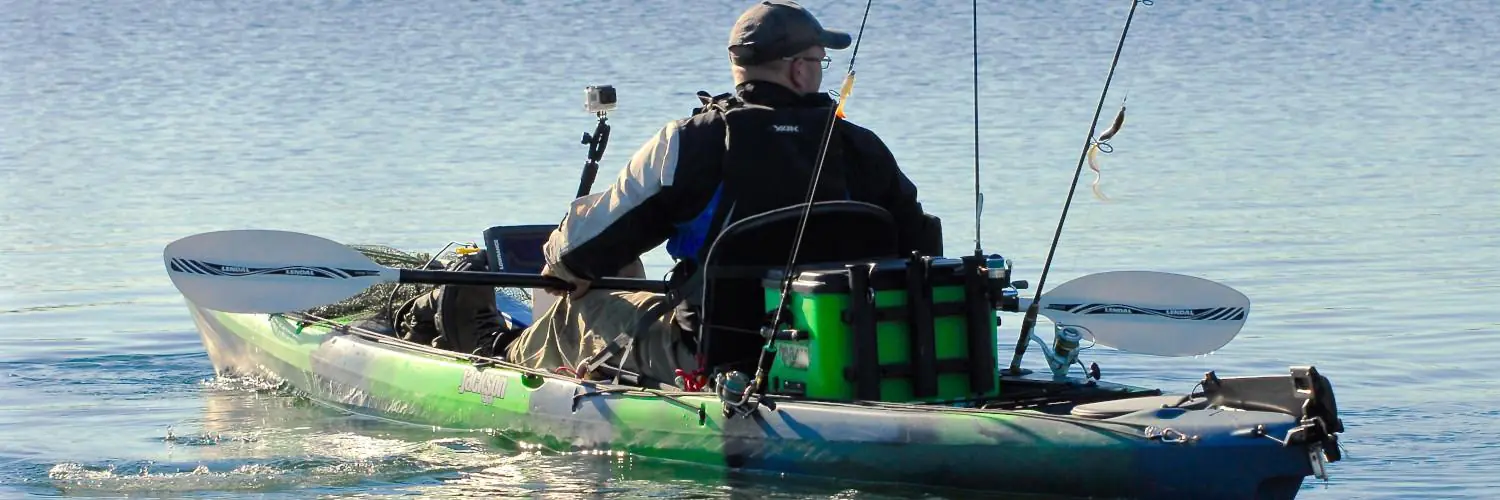
Fishing-focused models like the Jetangler include multiple mounting bases. These allow for the addition of fish finders, GPS units, and camera mounts.
Many jet kayaks feature rail systems along the sides. These allow for easy attachment of rod holders, tackle boxes, and other accessories.
Some models include cooler storage areas. These can be used to keep catches fresh or store food and drinks for longer trips.
Performance and Versatility
Jet-powered kayaks offer impressive speed and range while adapting well to activities like fishing and hunting. They provide advantages over traditional paddle kayaks and canoes in many situations.
Speed and Range Capabilities
Jet-powered kayaks can reach speeds of 20 mph or more, far surpassing paddle kayaks. Many models have a range of 40-60 miles on a single tank of fuel. This allows kayakers to cover long distances quickly.
The engines typically range from 9.5 to 15 horsepower. Higher horsepower generally means faster top speeds and better acceleration.
Factors affecting speed and range include:
- Hull design
- Engine power
- Fuel tank size
- Weather conditions
- Passenger/cargo weight
Adaptations for Fishing and Hunting
Jet kayaks are popular with fishing enthusiasts and waterfowl hunters. Many models have features designed for these activities:
- Rod holders
- Fish finders
- Coolers for catch storage
- Camouflage paint options
- Gun racks
- Extra cargo space
The quiet electric motor options are ideal for sneaking up on fish or game. Anglers can quickly move between fishing spots. Hunters can access remote wetlands with ease.
Comparing Traditional Canoes and Kayaks
Jet kayaks offer key benefits over paddle-powered boats:
| Jet Kayaks | Traditional Canoes/Kayaks |
|---|---|
| Faster speeds | Slower, more effort |
| Longer range | Limited by paddler stamina |
| Less physical exertion | More physical workout |
| Better for rough water | Better for calm water |
| Higher cost | More affordable |
| Require fuel | No fuel needed |
Paddle kayaks and canoes still excel for exercise, quiet nature viewing, and accessing very shallow water. But for covering distance or battling currents, jet kayaks have clear advantages.
Practical Considerations
Jet drives add power and speed to kayaks, but they come with unique practical aspects to think about. These include how to move and set up the kayak, as well as how to keep it running smoothly.
Ease of Transport and Assembly
Jet kayaks are often heavier than regular kayaks. This extra weight can make them harder to carry and load onto a car. Some models come apart for easier transport. Users may need to take off the jet drive or break down the kayak into smaller pieces.
Setting up a jet kayak takes more time than a standard kayak. Users need to attach the jet drive, connect fuel lines, and check all systems before launching. This process might take 15-30 minutes, depending on the model.
Many jet kayaks have adjustable foot pedals and a central joystick for steering. These parts may need to be set up each time the kayak is used. Some kayaks have quick-release systems to speed up this process.
Maintenance and Service Requirements
Jet drives need more upkeep than paddle kayaks. Users should flush the system with fresh water after each use in salt water. This helps prevent corrosion and buildup of salt and sand.
The jet intake can get clogged with weeds or debris. Kayakers may need to clear it out during trips. Some models have built-in cleaning systems to make this task easier.
Fuel systems require regular checks. Users should look for leaks and make sure fuel lines are secure. Electric start systems and analog gauges also need testing to ensure they work properly.
Many jet kayaks use a closed loop water cooling system. This system needs antifreeze checks and changes, just like a car. Owners should plan for yearly service to keep the engine running well.